
When an inspection makes sense
- Right after a leak, before anyone starts tearing out materials
- When you smell something musty but cannot see water
- When the water bill jumped and you suspect a hidden or slab leak
- Before buying a home that shows old stains or patched drywall
- When a landlord, tenant or HOA disagrees about where a leak started
- After drying, to confirm a job was really finished
The tools, and what each one tells you
| Tool | What it does | Limits |
|---|---|---|
| Penetrating (pin) meter | Reads moisture inside drywall, wood and trim | Leaves tiny holes; reads one spot at a time |
| Non-penetrating meter | Scans surfaces like tile, hardwood and drywall without damage | Reads near the surface; affected by metal and dense materials |
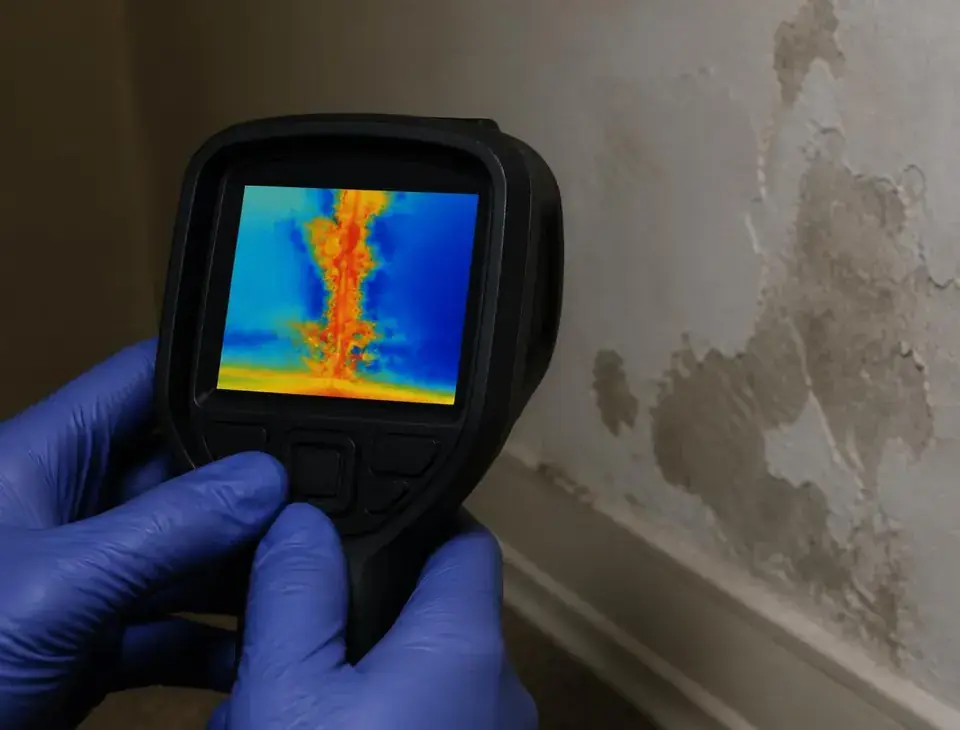
| Thermal imaging camera | Shows temperature patterns; wet areas often read cooler | Shows clues, not moisture; every spot must be confirmed with a meter |
| Thermo-hygrometer | Measures air temperature and humidity | Describes the room, not the materials |
| Borescope camera | Looks inside wall cavities through a small hole | Small field of view |
What a good inspection report includes
- The source, and whether it has been stopped
- A sketch of each affected room with wet areas marked and readings written in
- Dry standard readings from unaffected areas for comparison
- The water category (clean, gray or black) and class (how much absorbed)
- Photos, including thermal images
- A recommendation: dry in place, remove, or monitor
That report becomes page one of the drying log during water damage mitigation.
Hidden leaks common in Dallas homes
- Slab leaks under tile and carpet, often warm spots on hot-water lines
- Shower pan leaks showing up as stains in the next room
- Attic AC overflows soaking insulation before the ceiling shows a stain
- Ice maker lines leaking under kitchen cabinets and hardwood
- Window and door leaks in wind-driven rain on exterior walls
Inspection versus mold assessment
A water damage inspection maps moisture. A mold assessment in Texas is a separately licensed service performed by a TDLR-licensed Mold Assessment Consultant. If you suspect mold, see mold inspection and mold assessment.
Call (972) 544-0840 to be connected with a provider who can inspect. For what comes after, see structural drying and our guide to water damage restoration in Dallas, TX.