
Mitigation versus restoration: what you are paying for
Mitigation keeps a water loss from getting bigger. Restoration rebuilds what was lost. On an insurance claim they are often separate estimates, sometimes from separate companies. Mitigation usually starts the same day as the call and is the part that decides how expensive the rebuild becomes.
| Mitigation | Restoration |
|---|---|
| Inspection and moisture mapping | Drywall hanging, tape and texture |
| Water extraction | Paint and trim |
| Removing materials that cannot be dried | New flooring and baseboards |
| Antimicrobial treatment | Cabinet and countertop replacement |
| Drying, dehumidification and daily monitoring | Final cleaning and walkthrough |
Mitigation is the center of emergency water damage restoration across Dallas. Get it right and a leak becomes a few days of fans and some new baseboard. Get it wrong and the same leak becomes mold, a flood cut around the whole room and a denied line item.
How a water damage inspection finds hidden water
Water goes where you cannot see it: under laminate, behind tile backsplash, into the wall cavity behind a vanity, along the top of a slab under carpet. A proper inspection uses three tools:
- Penetrating moisture meters with pins that read moisture inside drywall and wood.
- Non-penetrating meters that scan surfaces like tile and hardwood without leaving holes.
- Thermal imaging cameras that show temperature differences. Wet materials read cooler as water evaporates, so a thermal image can trace a leak path across a ceiling or down a wall. A thermal image is a lead, not proof; the crew confirms each spot with a meter.
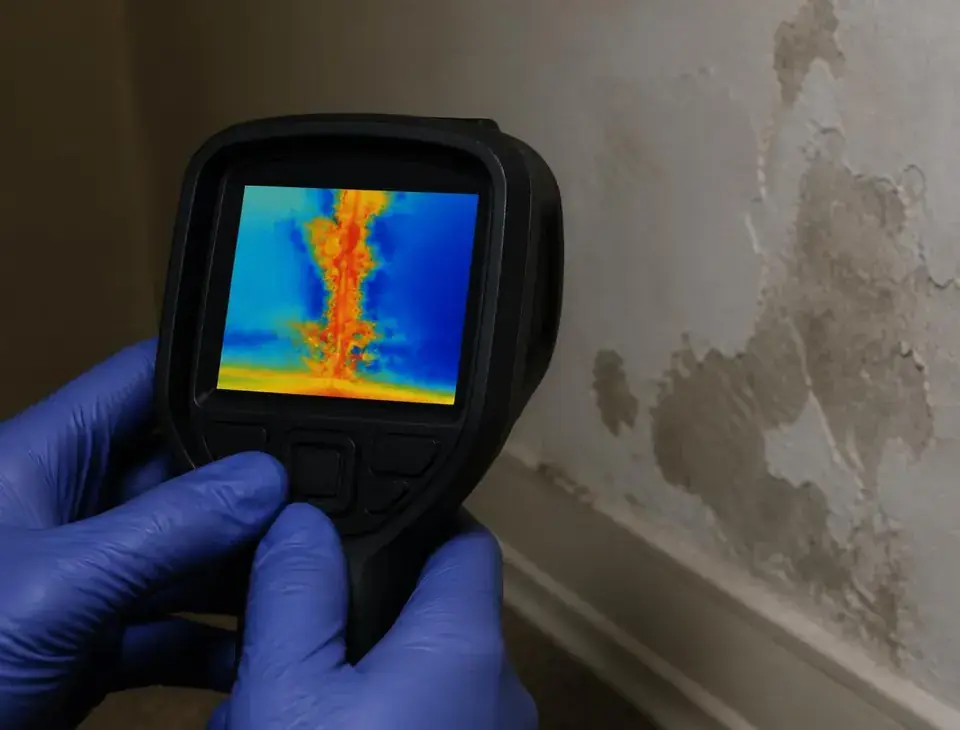
The result is a moisture map: a sketch of each room showing where readings were wet, with numbers. That map becomes the first page of the drying log, and it is what your adjuster reads to understand why certain materials were removed.
Classes of water damage and why they change the equipment
The IICRC S500 standard grades how much water a room absorbed. The class decides how many air movers and how much dehumidification the room needs.
- Class 1: Small area, little absorption. Part of a room, mostly hard surfaces.
- Class 2: A whole room, with water wicked up walls less than about 24 inches, and carpet and pad wet.
- Class 3: Water came from above. Ceilings, walls, insulation and floors are all saturated.
- Class 4: Specialty drying. Water soaked into low-permeability materials like hardwood, plaster, brick, stone or a concrete slab, which need longer drying, lower humidity and sometimes heat or floor-drying mats.
Older East Dallas and Oak Cliff homes often land in Class 4 because of original hardwood and plaster. That is one reason the Lakewood and East Dallas page spends time on old houses.
Structural drying and dehumidification, explained plainly
Drying works by moving moisture from wet materials into the air, then removing it from the air. Air movers do the first part by blowing across wet surfaces. Dehumidifiers do the second.
- Low-grain refrigerant (LGR) dehumidifiers are the workhorse. They pull water out of the air even when it is already fairly dry, and they are the right tool for most Dallas homes.
- Desiccant dehumidifiers use a drying material instead of coils and work well in cold conditions, like a winter crawl space or a big commercial space.
- Air movers are placed along wet walls at an angle, usually every 10 to 16 feet of wall, plus extra for wet floors and ceilings.
- Specialty tools include wall cavity injection systems that dry behind cabinets and drywall through small holes, and panel systems that dry hardwood from the top.
Keep doors and windows closed while equipment runs, even on a nice day. Opening the house lets humid outside air in, especially during the long, sticky stretches of a Dallas summer, and slows drying. Keep the AC running at a normal setting unless the provider says otherwise.
The drying log: your best friend on an insurance claim
A good provider takes readings every day and writes them down: room by room, material by material, plus temperature and humidity inside and outside the house. When wet materials match the dry standard, meaning readings from the same material in an undamaged part of your home, equipment comes out.
Ask for a copy. If an adjuster questions why the job took five days or why a wall was cut, the log answers it. It also protects you later: if you sell the house, a documented, verified dry-out is worth having in the file.
What you will see and hear during drying
- Noise. Air movers are loud. Plan for it in bedrooms, or ask whether a room can be scheduled differently.
- Heat. Equipment adds warmth. In summer the AC works harder.
- Power use. A drying job can noticeably raise an electric bill. Keep it; many policies reimburse it.
- Daily visits. Short check-ins to take readings and adjust equipment.
- Small holes. Pin meters and cavity drying leave tiny holes that get patched during repairs.
When mitigation is not enough
If mold is already visible, or the water sat long enough that the job changes from drying to removal, Texas mold rules come into play. See mold remediation in Dallas for how licensed assessment and remediation work. If the ceiling or walls need rebuilding after drying, the ceiling, wall and floor water damage repair page covers that stage.
For anything still wet right now, call (972) 544-0840 and say you need mitigation started today.