
What people mean by black mold
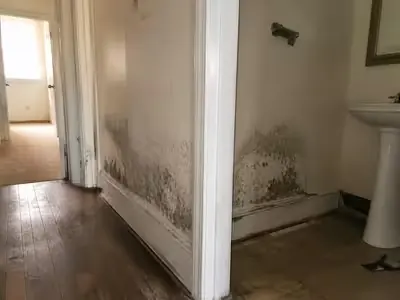
Stachybotrys chartarum is the mold usually meant by "black mold." It grows on materials that stay wet for a long time, especially the paper face of drywall, ceiling tiles and wood. It needs persistent moisture, which is why it often shows up after a leak that went unnoticed for weeks, or after flood water.
But many common molds are dark green, gray or black. You cannot identify a species by color. A lab can, if it matters for your situation.
How dangerous is it?
Mold can cause allergic reactions, asthma flare-ups and irritation in sensitive people, and those effects are not unique to one color. The CDC advises removing indoor mold regardless of type rather than testing to identify the species first. People with asthma, allergies, weakened immune systems, infants and older adults are most at risk and should stay away from the growth until it is handled.
Be skeptical of anyone who uses "toxic black mold" to rush you into a big, expensive job without showing you the moisture source, the extent of the damage and a written scope.
Where it shows up in Dallas homes
- Behind drywall after a slow plumbing leak
- Under sinks and behind dishwashers
- On drywall below attic AC overflows and roof leaks
- In homes that took floodwater, like East Dallas in August 2022
- In vacant or closed-up houses where the AC was off through the summer
How black mold is removed
- Find and fix the water. Stachybotrys means there was long-term moisture.
- Containment and negative air so spores do not spread during removal.
- Remove damaged porous materials: drywall, insulation, carpet and ceiling tiles with growth.
- HEPA vacuum and clean framing and hard surfaces.
- Dry to normal moisture levels.
- Clearance by a separately licensed assessor on licensed projects.
The process is the same as for other molds. What changes is usually the scale, because black mold signals a longer-running water problem. For the full process see mold remediation, and for drywall specifically drywall mold removal.
Should you test for black mold?
If you can see it and know the cause, testing rarely changes the plan; it all comes out either way. Testing helps when the growth is hidden, when someone has health concerns and wants documentation, or for clearance after removal. See mold testing.
Call (972) 544-0840 to be connected with a licensed remediation company in Dallas.