
The usual suspects
| Appliance | Common failure | Where water hides |
|---|---|---|
| Water heater | Tank rusts through; relief valve discharges; fitting leaks | Garage slab, closet walls, or ceilings below an attic unit |
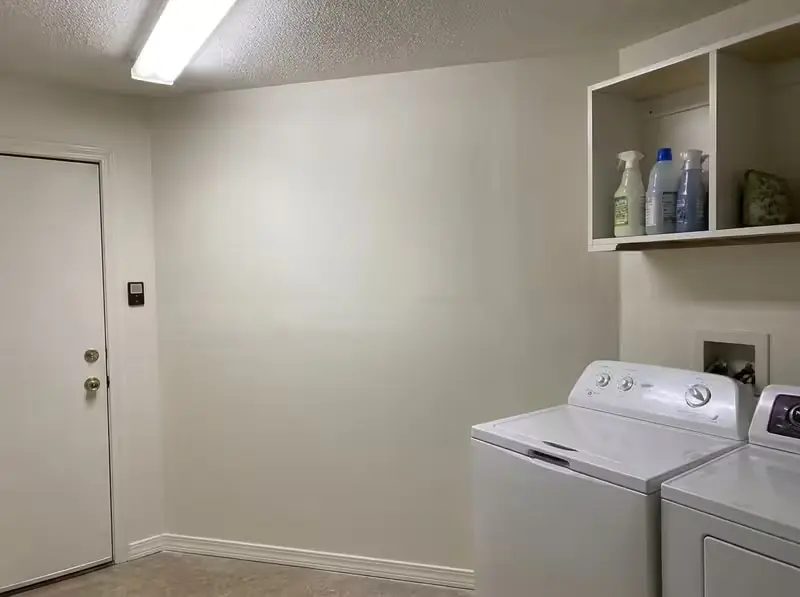
| Washing machine | Rubber supply hose bursts; drain hose pops out | Laundry floor, under adjoining walls, ceiling below an upstairs laundry |
| Refrigerator / ice maker | Plastic supply line cracks | Under kitchen cabinets and hardwood |
| Dishwasher | Drain or supply leak; door seal | Under the cabinet and subfloor, often unseen for weeks |
| AC air handler | Clogged condensate line; rusted pan | Attic insulation and ceiling below |
| Garbage disposal | Cracked housing or loose connections | Sink base cabinet |
What to do in the first ten minutes
- Close the supply valve behind the appliance. For a water heater, close the cold-water valve on top and turn off gas or power.
- If you cannot find the valve, shut the main.
- Unplug the appliance only if you can reach the plug without standing in water.
- Pull out towels-worth of water, then take photos, including the failed hose or part.
- Call (972) 544-0840 if water went under cabinets, flooring or walls.
Drying under cabinets
Kitchen and laundry leaks almost always reach under the cabinets. Water sits under the cabinet base where air cannot reach it. Crews remove the toe kicks, drill small holes if needed, and push dry air into the cavity. If the cabinet bases are particleboard and swollen, they are replaced; plywood bases often dry. Countertops stay on unless the base cabinets come out.
The attic water heater problem
Many Dallas homes built in the 1970s and 1980s, especially in Far North Dallas, have water heaters in the attic. A tank failure there sends water straight through the ceiling. Every attic water heater should sit in a drain pan with a working drain line. Tanks commonly last about 8 to 12 years; check the label for the age.
Cheap upgrades that prevent expensive leaks
- Braided stainless steel washer hoses, replaced every five years or so
- Metal-braided ice maker and dishwasher supply lines instead of plastic
- Drain pans under water heaters and washers on upper floors
- A float switch on the AC drain pan
- Battery leak sensors, or a whole-house automatic shut-off valve
Insurance for appliance leaks
Sudden appliance failures are usually covered as accidental water damage. The appliance itself usually is not. Slow leaks that went on for weeks, like a dishwasher seeping under the cabinet, can be denied as gradual. Keep the failed hose or part for the adjuster.
For pipe failures, see burst pipe water damage. For wet floors, see hardwood floor water damage. Our emergency water damage restoration guide for Dallas covers the full process.